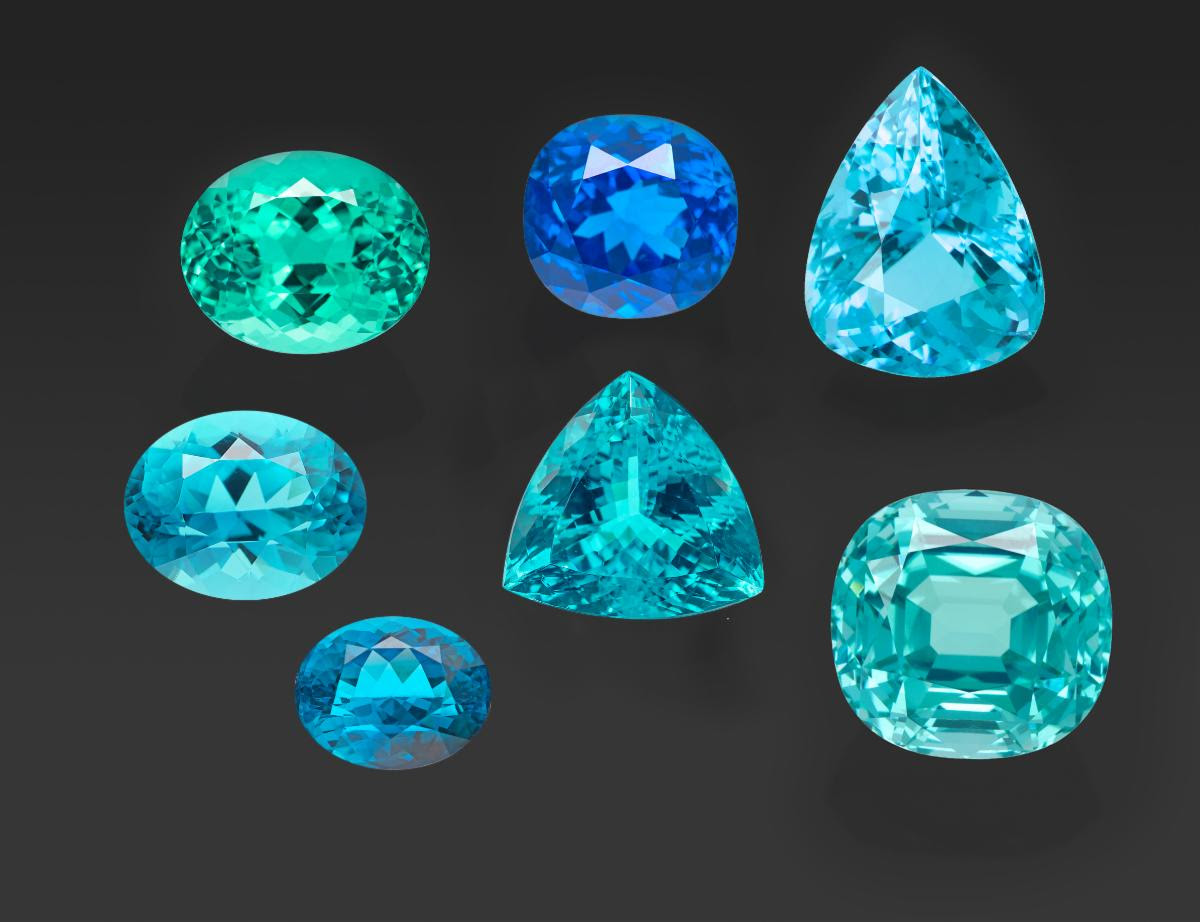
For nearly four decades, the word “Paraíba” has done something unusual in the gem trade: it stopped being just a place name and became shorthand for a colour, an electric, neon blue-green unlike anything else found in nature. What makes that colour so coveted isn’t only its beauty. It’s its scarcity. Until now, the entire planet was known to offer exactly three places capable of producing it. This week, a fourth name entered the conversation, and gemologists in Switzerland are now racing to confirm whether it truly belongs on that very short list.
The Swiss Gemmological Institute SSEF has confirmed it received credible trade reports of a new deposit of copper-bearing tourmaline, this time in Ethiopia. If verified, it would be the first new source of Paraíba tourmaline to emerge in over twenty years, and the story of how SSEF arrived at this hypothesis is itself a small piece of gemological detective work.
A Colour Born in a Brazilian Pegmatite
The story starts in the late 1980s, when prospector Heitor Barbosa uncovered something unprecedented in a weathered pegmatite near the village of São José da Batalha, in the Brazilian state of Paraíba. What came out of the ground wasn’t simply a fine tourmaline. It was a stone whose blues and greens seemed to glow from within, a saturation the trade quickly nicknamed “neon” or “electric.” The cause turned out to be copper, present within the tourmaline’s crystal structure in a way no one had documented before. The gem world had a new obsession, and a name to go with it.
But Paraíba and its neighbouring deposits in Rio Grande do Norte never produced much. Fine material stayed scarce, prices climbed accordingly, and for over a decade, owning a true Paraíba tourmaline meant owning something genuinely rare.
The Map Widens, Slowly
Relief came in the early 2000s, when copper-bearing tourmalines turned up in Nigeria and, more significantly, in Mozambique. Mozambique in particular changed the supply picture: production scaled up, and the deposit occasionally yielded exceptional rough, some pieces weighing several hundred carats, a size almost unheard of from the original Brazilian source. The trade kept using “Paraíba” as the name for the gem category, even as its geography expanded well beyond Paraíba itself.
That expansion brought its own complication, one that has quietly occupied gemological laboratories ever since: telling these origins apart. A stone’s birthplace can meaningfully affect its value, yet copper-bearing tourmalines from different countries can share remarkably similar chemical fingerprints.
Why Ethiopia Is Hard to Prove, For Now
The Ethiopian reports surfaced at a telling moment. SSEF had recently been examining a group of Paraíba tourmalines whose origin simply wouldn’t resolve using its existing analytical methods. Standard trace-element analysis, the technique labs rely on to separate Brazilian material from Mozambican or Nigerian stones, kept returning inconclusive results. The working hypothesis is that these stones may, in fact, be Ethiopian.
Here’s the catch: preliminary testing shows considerable chemical overlap between the suspected Ethiopian stones and tourmalines from Brazil specifically, the very source whose name became synonymous with the gem. That overlap makes the question of origin genuinely difficult to settle for certain specimens. SSEF has said it is now working to characterise this potential new material in depth and sharpen the analytical tools needed to separate it from established sources.
Nothing about this is settled yet. The deposit hasn’t been independently confirmed beyond the trade reports SSEF received, and the lab itself is careful to frame its findings as preliminary. But that’s precisely what makes this moment worth watching. Every known source of Paraíba tourmaline, Brazil, Nigeria, Mozambique, has reshaped how the trade thinks about one of its most coveted colours. If Ethiopia joins that list, it won’t just add a country to a label. It will add another chapter to one of gemology’s longest-running detective stories: the search for where, exactly, that impossible blue-green comes from.