During Paris Haute Couture Week, while the world’s eyes were fixed on silk and tulle, Damiani quietly staged its own kind of miracle. “Arte Maestra” takes eight of the most celebrated paintings ever made and refuses to let them stay flat, silent, hung behind glass. Botticelli’s meadow becomes a cascade of emeralds. Caravaggio’s Medusa turns to alexandrite and blood-red ruby. Monet’s water lilies drift across a Colombian emerald the size of a secret. Let’s discover why this is the collection everyone is still talking about.
A Century of Mastery Meets the Masters
Damiani did not choose this path lightly. For over a hundred years, the Maison has built its name on a singular conviction: that jewelry, at its finest, is not decoration but art. With Arte Maestra, that conviction becomes a manifesto. The collection draws its DNA from eight masterworks spanning four centuries and three continents: Caravaggio’s haunting Medusa, Botticelli’s Allegory of Spring, Hokusai’s Great Wave off Kanagawa, Jeong Seon’s A Leisurely Cat in Autumn, Kandinsky’s Gray Form, Klimt’s The Kiss, Monet’s Water Lilies, and Van Gogh’s Sunflowers.
What unites them is not style, or era, or geography. It is the same restless spark, that invisible force which pushed each artist to bend intuition into form. Damiani’s master goldsmiths chased that very spark, translating brushstroke into setting, pigment into gemstone, canvas into gold.
Eight Paintings, Eight Jewels, One Obsession
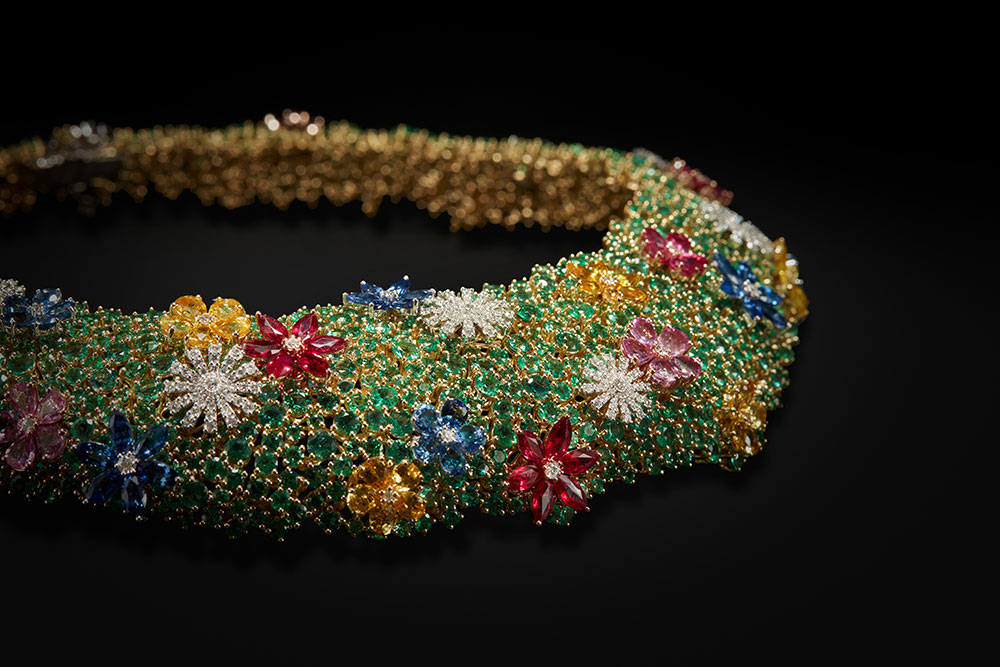
Floréa opens the story with spring itself. Botticelli’s garden of Flora becomes a meadow of 1,058 emeralds shimmering in two shades, punctuated by daisies in diamond and white gold, and a chorus of sapphires and rubies in soft dialogue. It does not simply reference the painting; it makes its ephemeral beauty permanent.
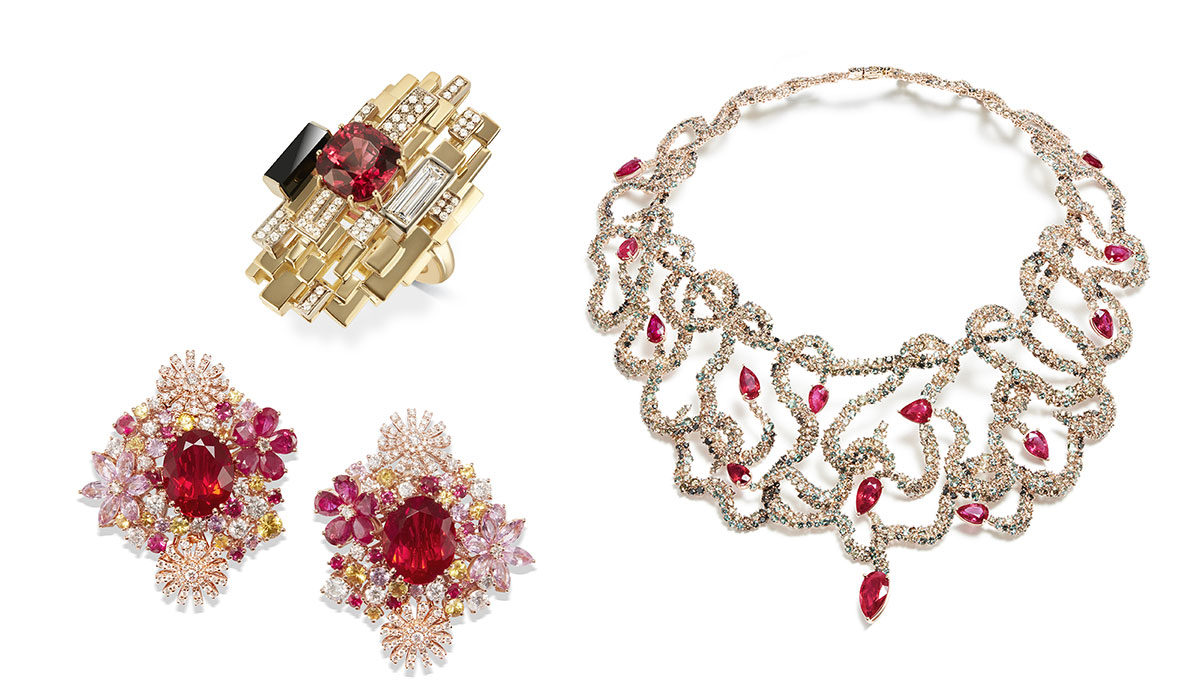
Malìa takes a darker road. Caravaggio’s Medusa, frozen at the instant of her own beheading, returns as a necklace of sculptural serpents in pink gold, alexandrite and black and brown diamonds, anchored by a Burmese Pigeon’s Blood ruby of over six carats. The alexandrites shift and flicker exactly as Caravaggio’s chiaroscuro once did on canvas, fascination and unease held in the same breath.
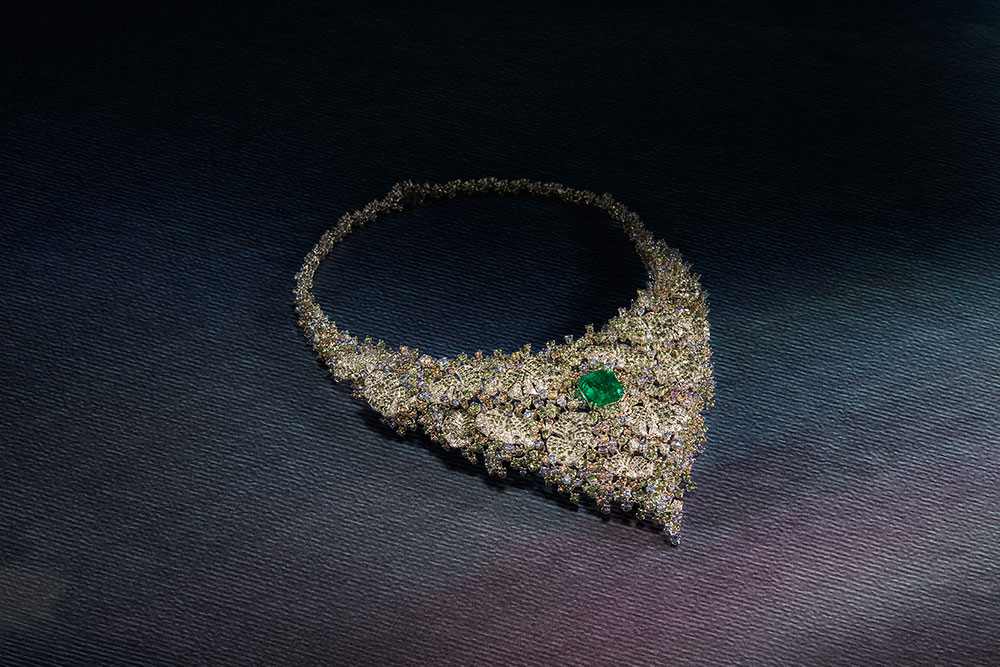
En-Plein-Air drifts into Monet’s pond at Giverny. A white gold necklace of floating water lily petals cradles a Colombian emerald of over ten carats in a Vivid Green Muzo so intense it seems to hold the water’s own depth, surrounded by 1,130 multicolored sapphires that ripple like reflected light.
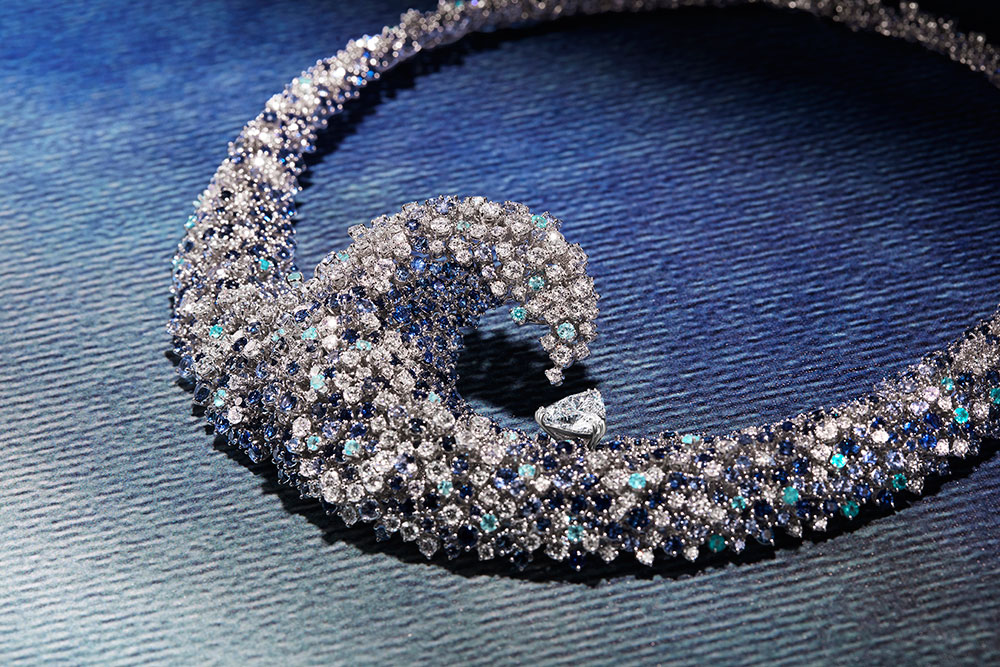
Impetuosa channels Hokusai’s Great Wave at the very moment it begins to break. Sapphires in tonal gradients, from deep indigo at the base to luminous pale blue at the crest, recreate the wave’s suspended power, while a three-carat trilliant diamond stands in for Mount Fuji itself, immovable beneath the storm.
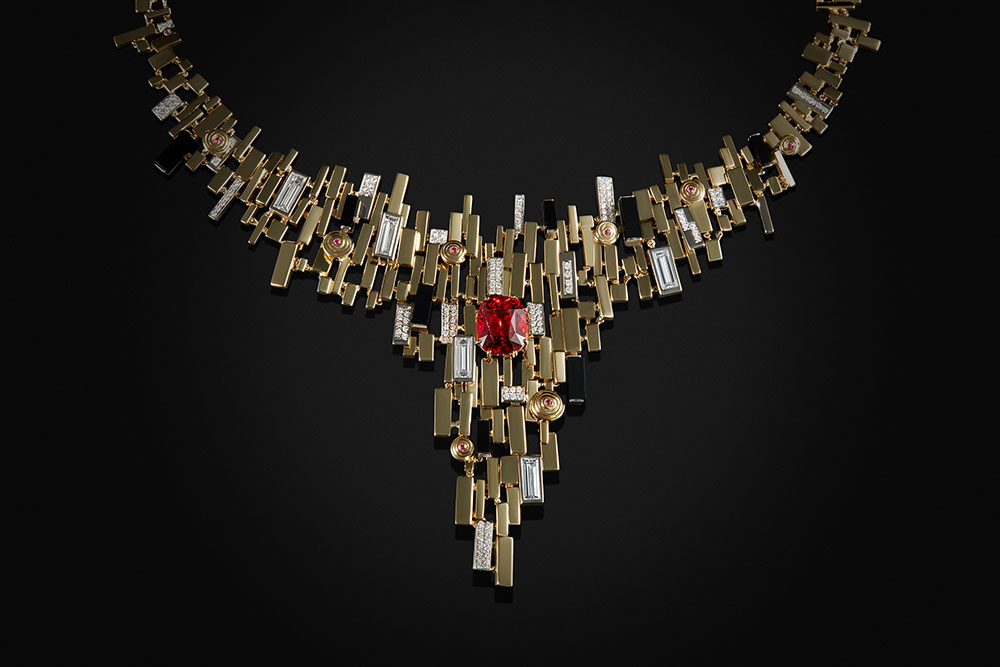
Estasi reimagines Klimt’s golden embrace in The Kiss through mosaic-like tiles of yellow gold, baguette diamonds and onyx, centered on a cushion-cut spinel of over seven carats in a vivid orangy red. It is Klimt’s dreamlike universe made tangible, wearable, eternal.
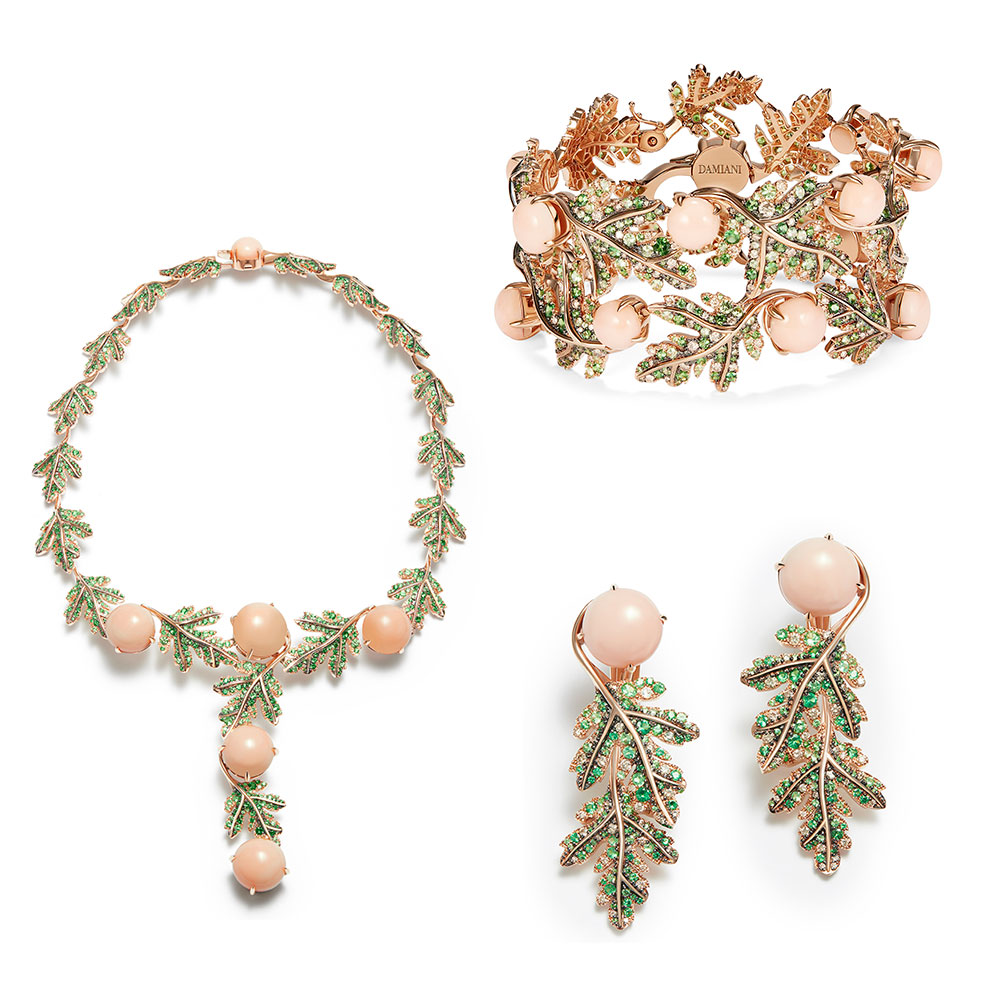
Impressioni d’Autunno finds quieter poetry in Jeong Seon’s contemplative cat curled beneath an autumn sky. Pink gold leaves, brown diamonds, two shades of tsavorite and cabochon corals recreate the painting’s stillness, proving that grand emotion can also whisper.
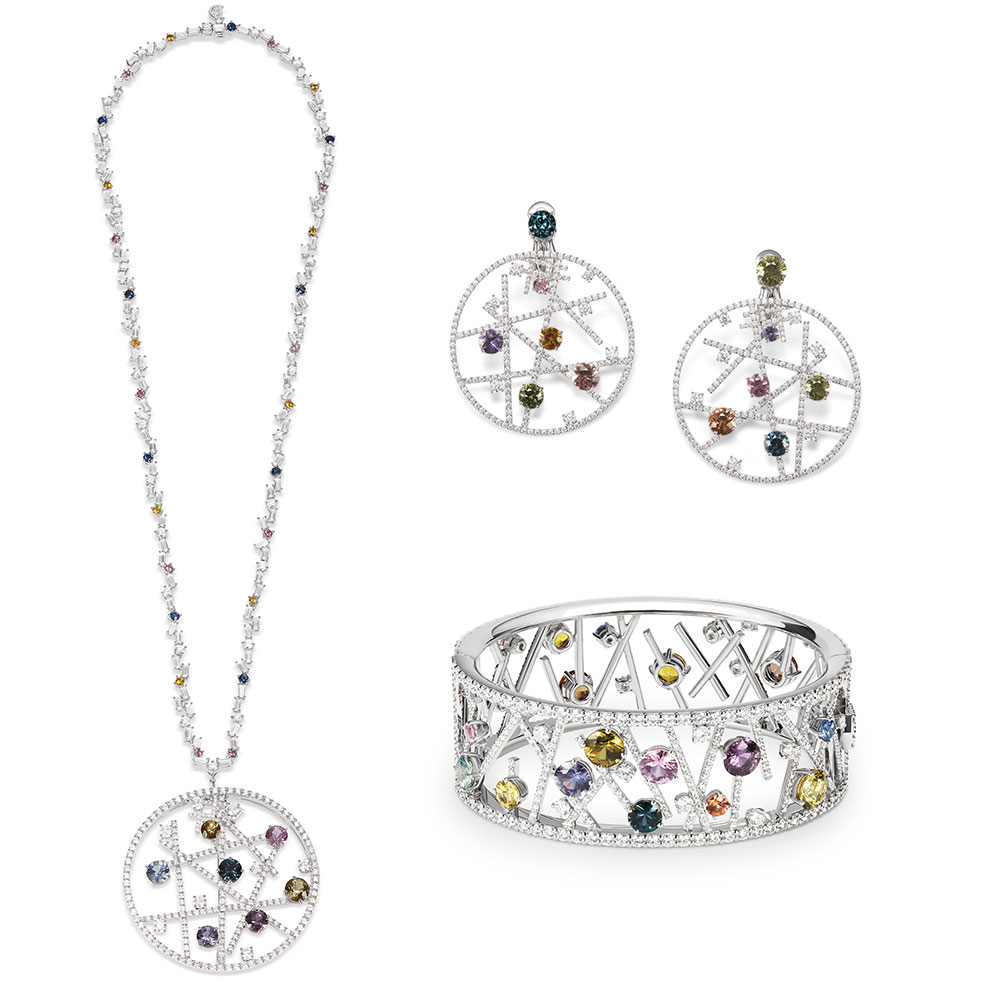
Pentagramma turns to Kandinsky’s abstraction and hears music in it. Seven fancy-color diamonds, in hues from blueish green to deep brownish yellow, are set like notes along a geometric staff of white, yellow and pink gold, a symphony rendered in stone.
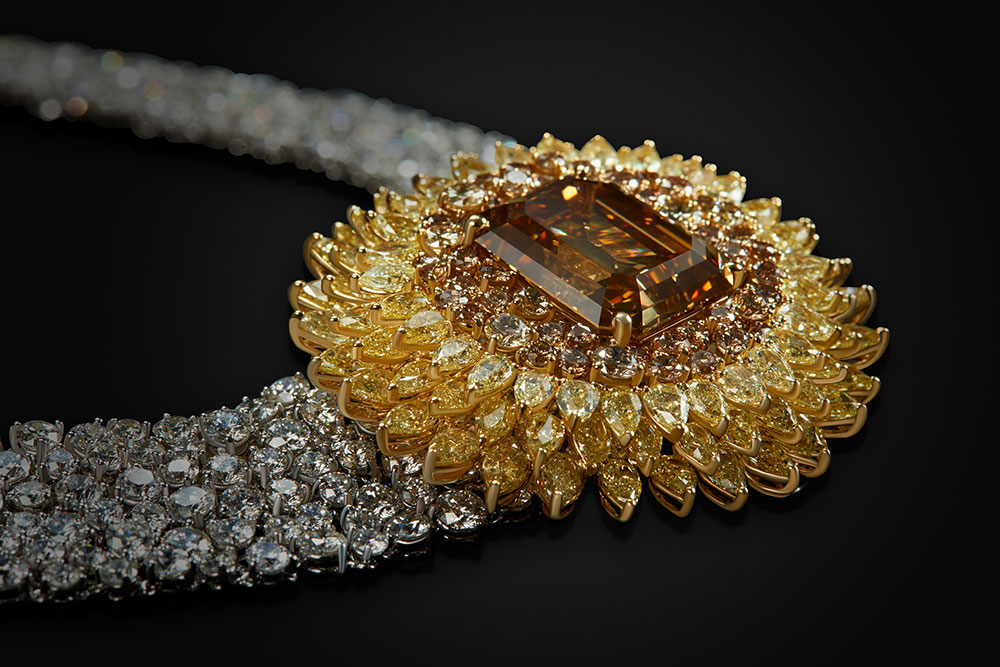
Radiosa closes the collection with Van Gogh’s Sunflowers in full, unapologetic radiance. A white gold and diamond choker supports a detachable sunflower pendant, its heart a fancy yellow-brown diamond of over 21 carats surrounded by a corolla of fancy yellow diamonds and a carpet of brown diamonds, capturing the same feverish yellow that made the Dutch master immortal.
Where Craftsmanship Becomes Storytelling
What makes Arte Maestra so compelling is not merely the scale of its stones, though the numbers alone are staggering: thousands of gems, museum-grade certifications, rare colors sourced from Myanmar, Colombia and Tanzania. It is the discipline behind the translation. Each piece required Damiani’s artisans to study brushwork the way a jeweler studies a stone’s inclusions, to find in a single passage of paint the exact gesture that could survive the leap into three-dimensional, wearable form.
This is why Arte Maestra feels less like a collection and more like a pilgrimage. Each necklace, each pendant, is a conversation stretched across centuries: between Botticelli and a Damiani goldsmith, between Hokusai’s ink and a sapphire’s blue, between Van Gogh’s restless hand and the cut of a diamond. Presented in the middle of Haute Couture Week, surrounded by ateliers pursuing their own obsessive perfection, Arte Maestra found exactly the right stage: a week devoted to the idea that beauty is worth every hour of labor it demands.
A Legacy Written in Light
Arte Maestra is, in the end, a love letter to human genius itself, the genius that painted a Gorgon’s gaze, that saw music in abstract form, that found a whole season in a cat’s repose. Damiani does not simply borrow from these masters; it kneels before them, then dares to answer back in its own language of gold and gemstone.
Walking away from this collection, one carries a quiet, insistent thought: that art never truly stays still. It moves from canvas to gold, from museum wall to jewelry case, from one century’s hand to another’s. And in Arte Maestra, Damiani proves, once again, that the greatest masterpieces are never finished. They simply wait for someone brave enough, and skilled enough, to give them a new form.