Rooted in Venice and guided by a vision that bridges heritage and contemporary creation, Salvadori Diamond Atelier embodies a quiet, deeply personal approach to high jewellery. In this interview, sisters Marzia — Creative Director and designer — and Monica, Commercial Director, both gemmologists, share their perspective on creation, craftsmanship and modern luxury, continuing the legacy of founder Gabriele Pendini. Step inside Salvadori’s universe and discover how history, emotion and ethics come together through one distinctive voice.
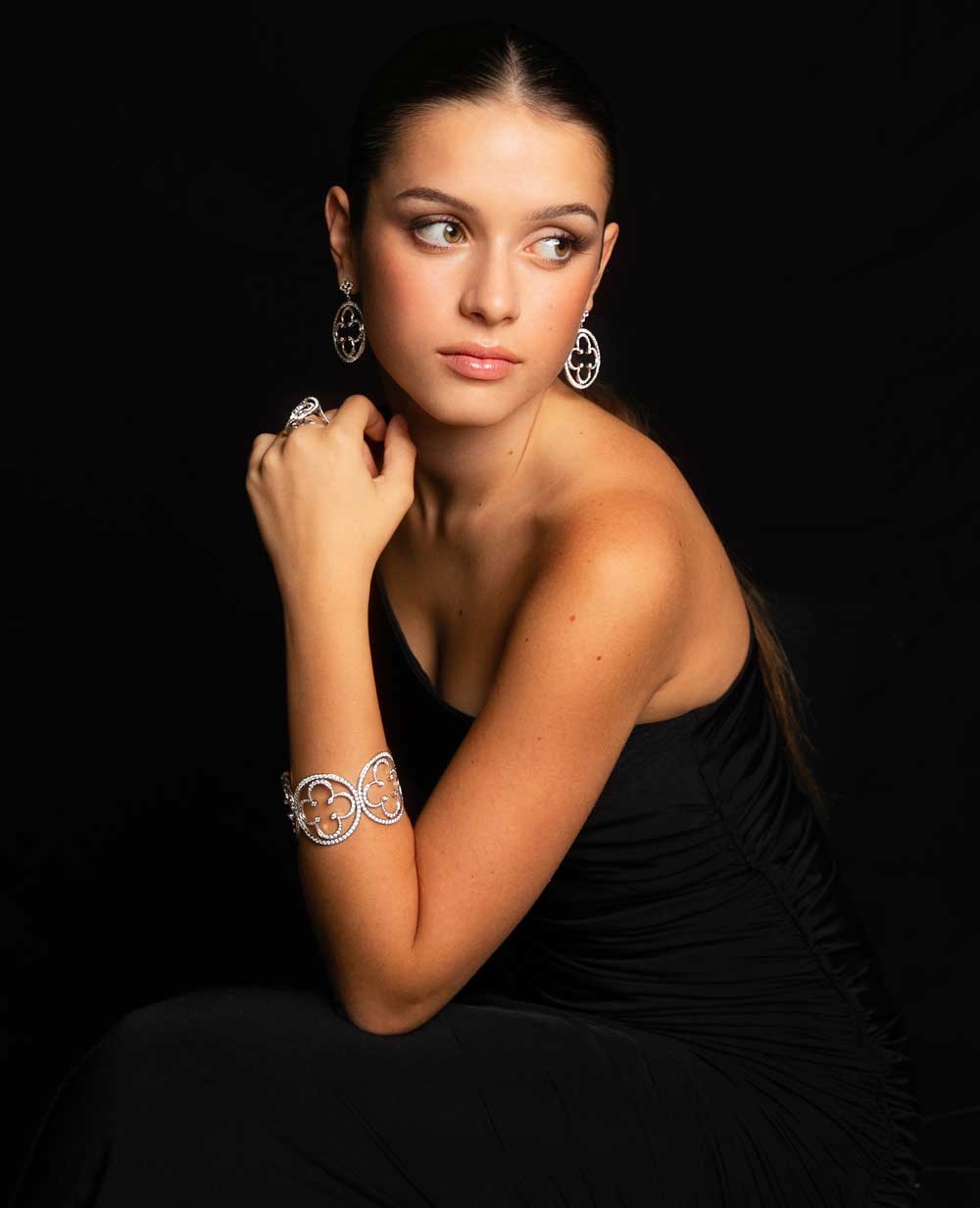
You come from a house with roots dating back to 1857, but Salvadori has a very contemporary identity. How do you personally balance history with the need to remain relevant today?
Salvadori’s history has never felt like a constraint to me, but rather a solid foundation to build upon. Knowing that our maison traces its roots back to 1857 carries a responsibility, but also a great freedom: the freedom to keep an inheritance alive, not frozen in time.
There is a quote by Winston Churchill that deeply resonates with my approach: “The farther backward you can look, the farther forward you are likely to see.”
It perfectly reflects the way I work. A deep understanding of the past allows me to move through the present with awareness and to imagine the future without losing identity.
In my creative process, I always start from a respect for craftsmanship and for knowledge passed down through generations, while feeling an equally strong need to engage with the present. I draw inspiration from art, architecture, emotions, and from the way people experience jewellery today: no longer just as an object, but as an expression of identity.
My role lies precisely in this balance: preserving the memory of the maison while translating it into a contemporary language. Tradition remains the anchor, creativity is what allows it to evolve.
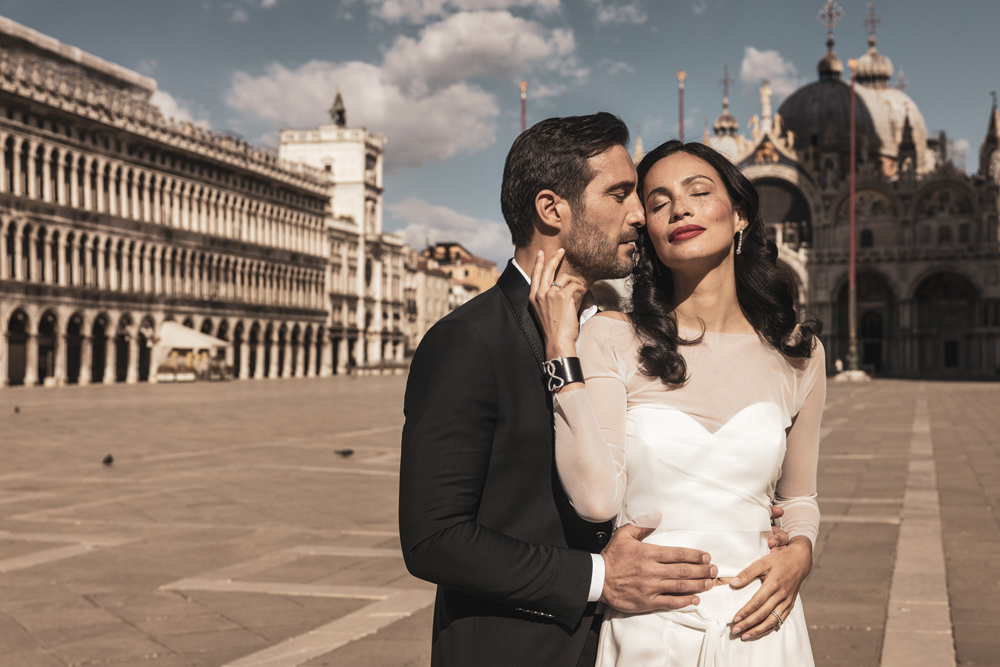
Venice is an incredibly powerful source of inspiration. Is there a place, a detail, or a moment in the city that keeps returning in your designs?
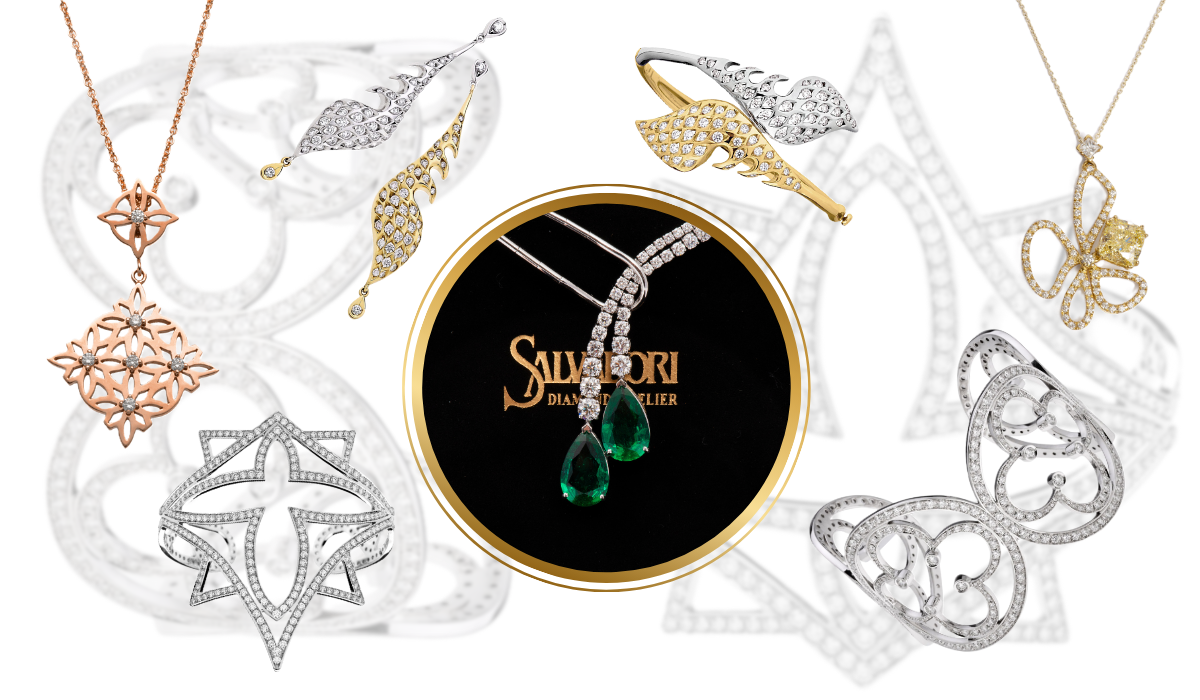
Venice is part of the way I observe and draw. My collections are always born from lived moments, from details that strike me and remain over time. The Ducale collection takes shape from the tracery of the Doge’s Palace, where lightness and structure coexist in an equilibrium that feels deeply my own. The Ca’ d’Oro collection, crafted in gold and diamonds, is instead inspired by the architectural motifs of the columns overlooking the Grand Canal, transformed into precious and luminous structures. The design of the windows of one of the most romantic bridges in the world is at the origin of the Sospiri collection, more intimate and silent, while the Dòlfin collection was born from watching gondolas glide at night over the still water of the canals. Dòlfin, in Venetian dialect, is the iron prow of the gondola: an essential form, rich in identity and movement. Each collection represents a different way of translating Venice into form, through my own gaze and through drawing.
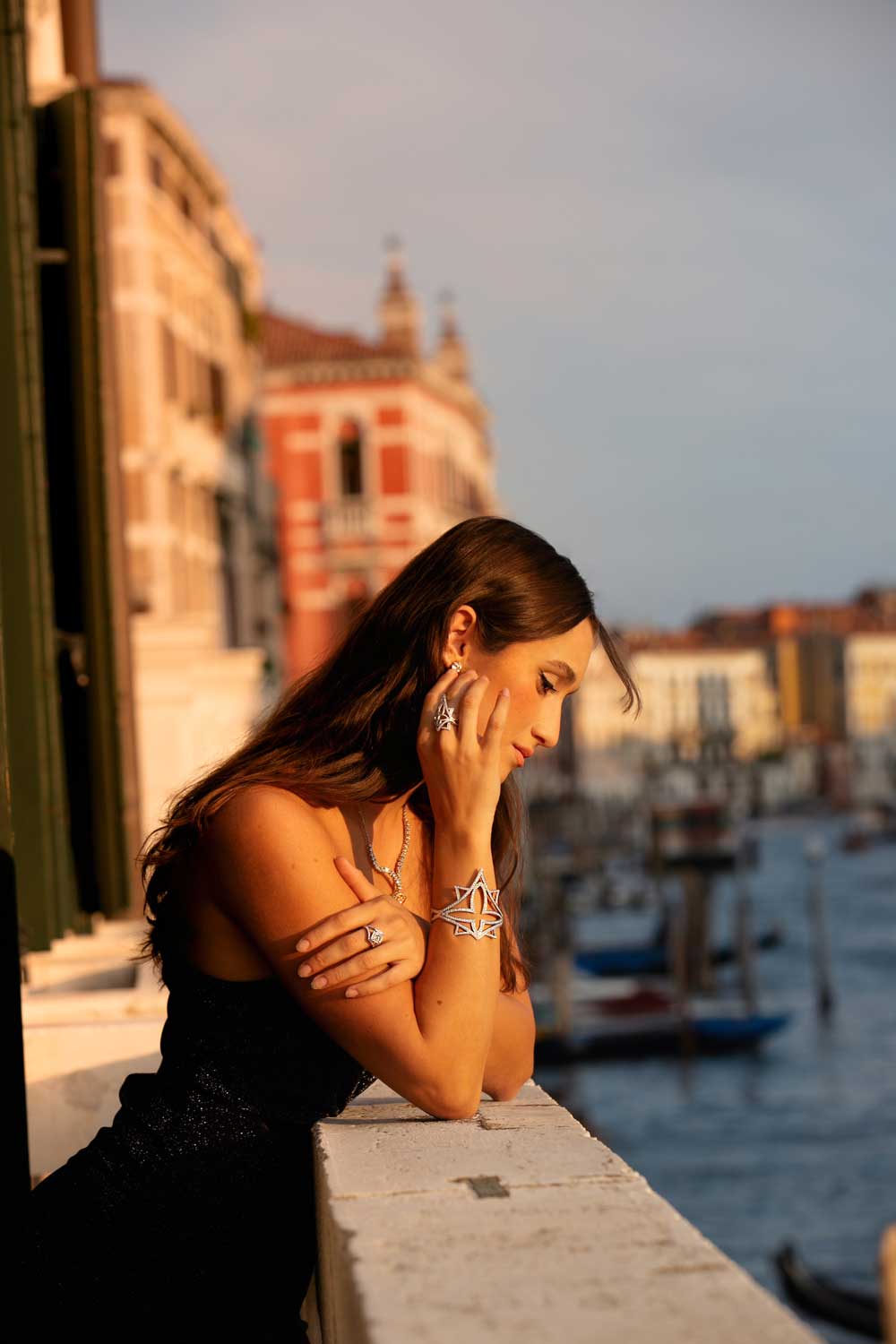
Many of your collections carry a strong emotional charge, almost as if they were telling stories. When you create a new piece of jewellery, do you usually start from an emotion, a visual idea, or a specific stone?
I have been drawing jewellery since I was a child, and I grew up surrounded by this world of precious stones, light, and matter. At the same time, I have always felt the need to express myself through other artistic forms: I paint, I regularly exhibit in art galleries, and I am also a writer. Come Onde sulla Sabbia is my latest novel and, in many ways, it reflects the same emotional universe that I express through my jewellery.
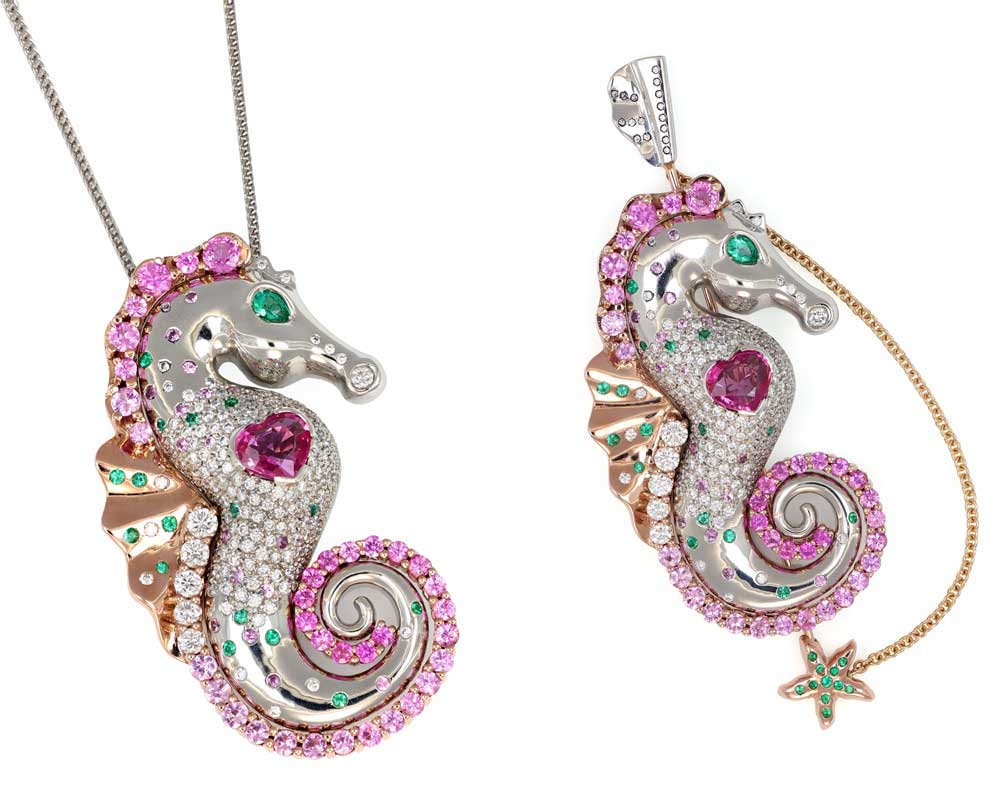
For me, designing a piece of jewellery is something elevated: it is an intimate act, it is my soul revealing itself to the world. My creations are born from emotions and memories, often connected to travel and lived experiences. My life is embedded in my jewellery. Stones, however, play a fundamental role. As Salvadori’s gemmologist, and by personally selecting every gem I use, there is a constant dialogue between emotion and material. Sometimes I shape the expression of an emotion around a specific stone; at other times, it is the stone itself—with its light and character—that guides the design. In art and in creation, there are no rigid rules: there is only listening.
You recently exhibited during Paris Haute Couture Week, a major milestone for any jewellery house. What did this experience mean to you, and how did the Parisian audience respond to Salvadori?
Participating in Paris Haute Couture Week, as an artist, is always an intense experience. It is an exciting moment, but also a deeply demanding one, because it requires me to step outside my creative space—where there are only my jewellery and myself—and to engage with the work of the wider world. Paris is a place where comparison is inevitable and, for this very reason, profoundly stimulating. Presenting my creations in that context means placing them in dialogue with different visions, languages, and sensibilities, and accepting to be observed with an extremely attentive eye.
The Parisian audience responded with great interest, taking time to look closely at the design, the structure of the pieces, and their emotional dimension. I sensed curiosity, respect, and a deep reading of my work. In that setting, Salvadori was welcomed as a maison with a distinctive voice, capable of speaking the language of contemporary high jewellery without renouncing its own identity.
You work very closely together as sisters, each with a different role. How does this dynamic influence creative decisions? Do you ever disagree in a constructive way?
We work very well together because we are deeply complementary. Within Salvadori Diamond Atelier, we each cover completely different roles, while still coming together to discuss and decide on the most important moments for the company. I am fully responsible for the artistic and creative vision as art director, while my sister is the commercial director and oversees all aspects related to business and sales. In a very natural way, I create and she sells. For me, creation cannot be a shared act. Designing a piece of jewellery is a deeply personal expression, closely connected to my most intimate emotions. I believe that this clear respect for each other’s roles is precisely what creates balance within our maison.
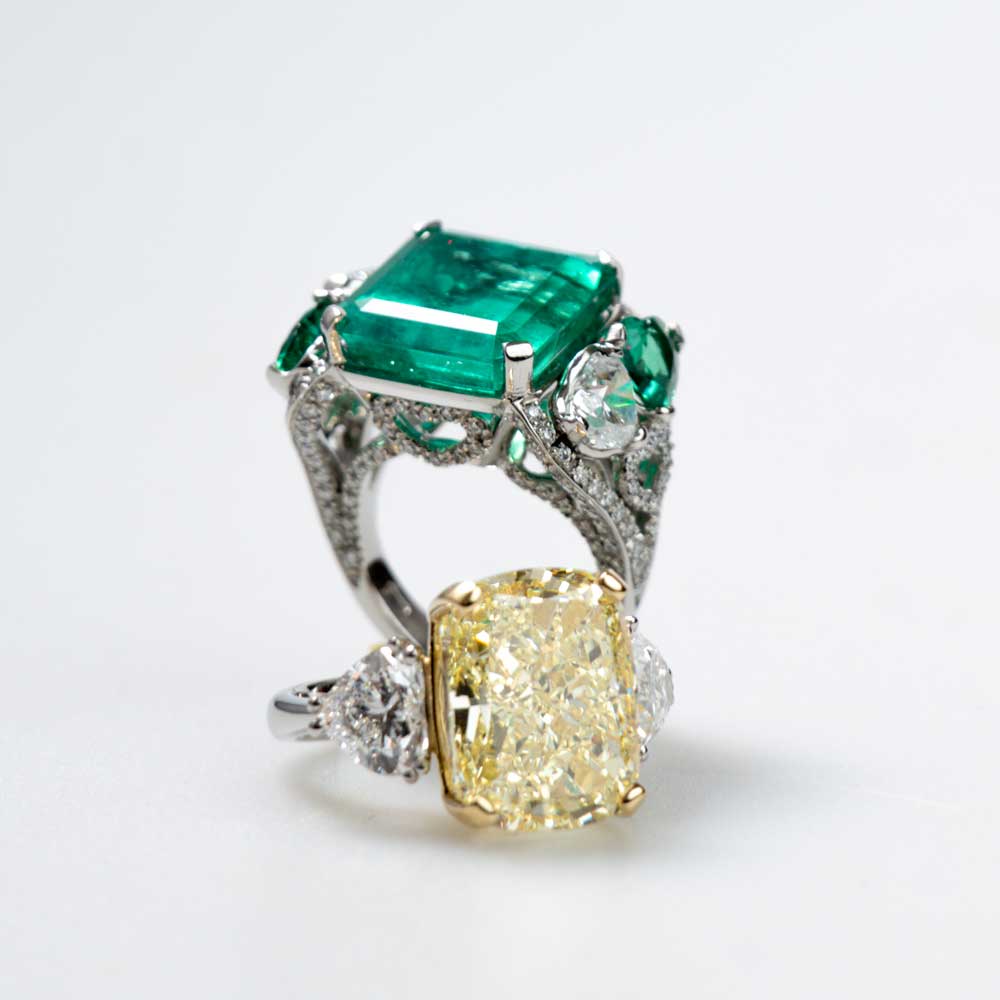
The craftsmanship of the atelier is clearly visible in the final pieces. Is there a phase of the jewellery-making process that clients rarely see, but that you consider essential to the soul of a Salvadori piece?
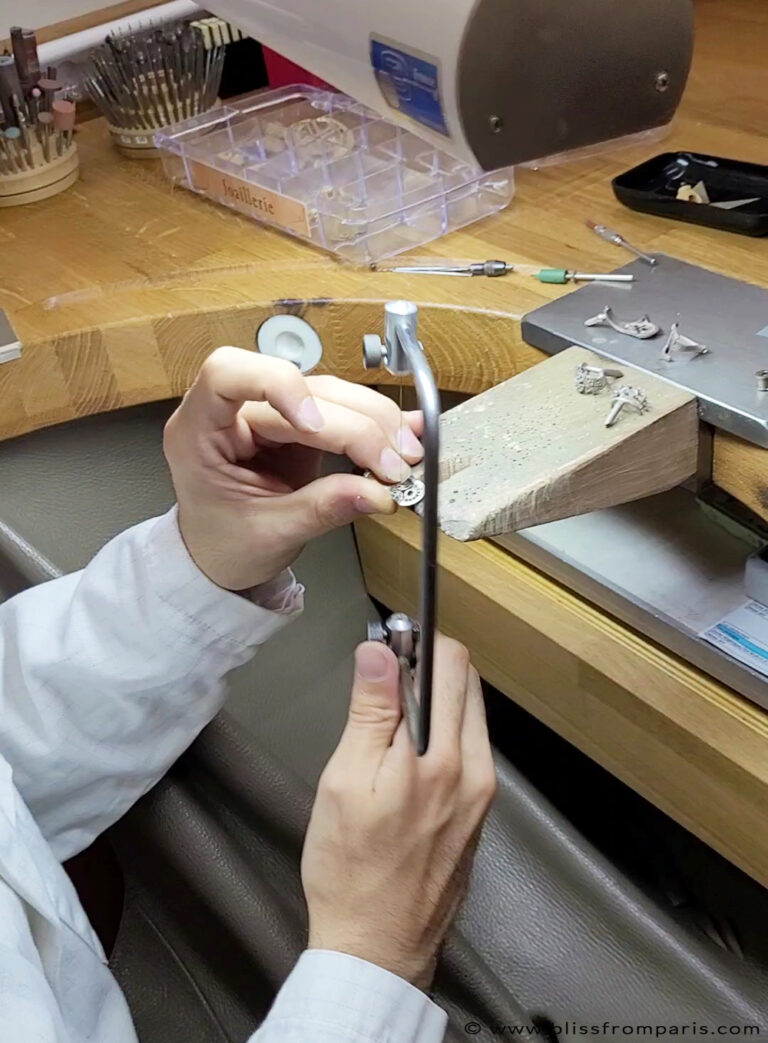
Once the design comes to life, the jewel passes into the expert hands of my goldsmiths. It is a long and complex journey, often invisible to the client, yet essential. Behind a single piece there can be as much as three months of work.
The drawing is first translated into a technical form, in order to optimise proportions and thicknesses, and from this the first wax prototype is created. It is a delicate phase: the piece is tested, refined, and tested again. Sometimes the result is immediate; other times it is necessary to melt it down and start over. This is simply part of the process.
When the piece, whether in gold or platinum, is finally ready, it moves to the hands of the stone setters, who with great mastery set the stones that I personally select. The jewel then returns to the goldsmiths, who assemble and finish it, working on every detail until the final polishing.
A high jewellery piece, such as those created by Salvadori, is the result of many stages: a continuous dialogue between different skills, but also between past and present. Ancient techniques, such as lost-wax casting, coexist with contemporary tools like 3D printing and microscope setting. Only after passing my final approval can the piece be displayed in the boutique, ready to be chosen.
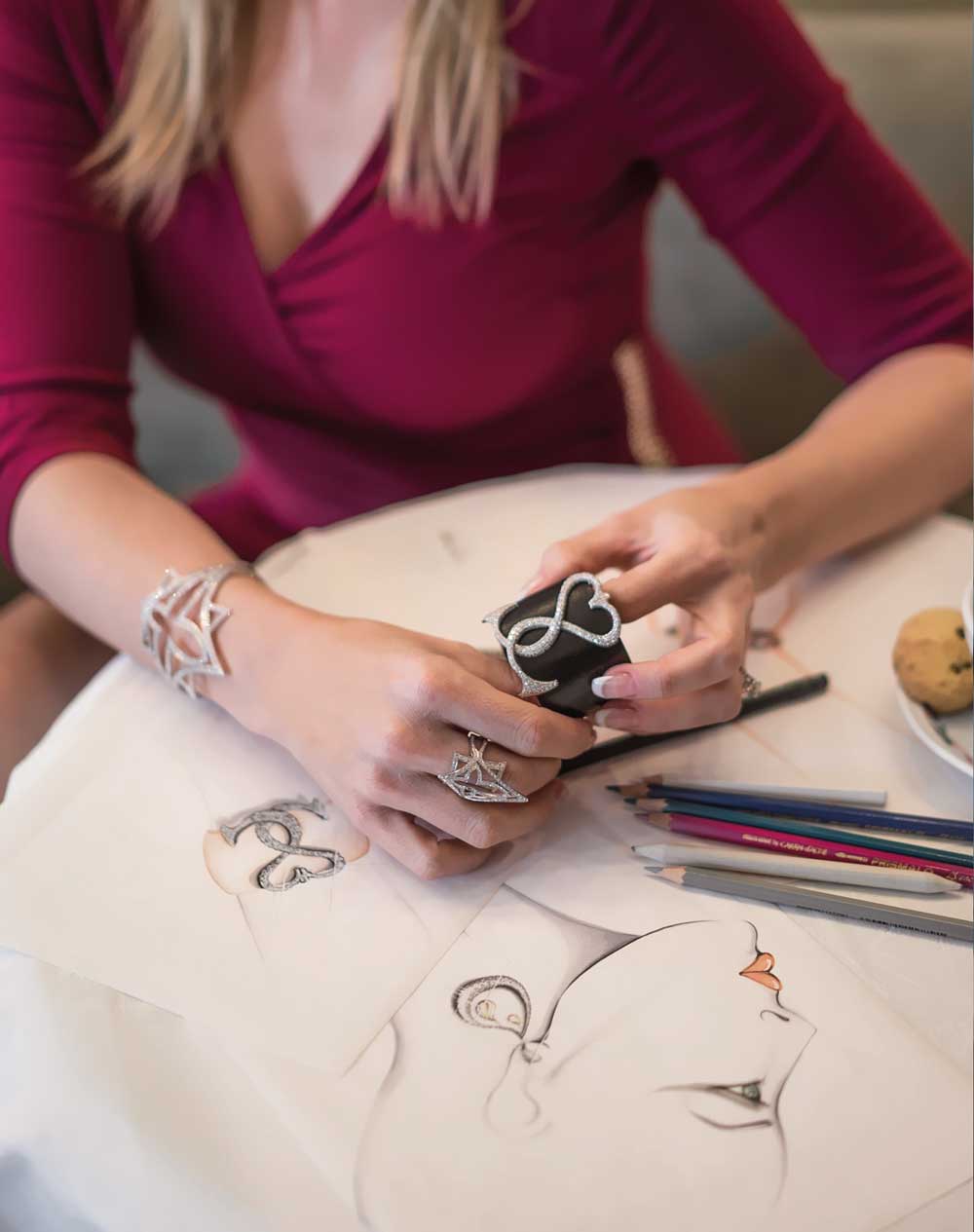
Diamonds and gemstones are at the heart of everything you do. How do you approach gemstone sourcing today, and which values are non-negotiable for you when selecting stones?
I come from a family of gemstone traders. My father was a diamond wholesaler and, together with my mother, travelled constantly to select stones directly at their places of origin: Colombia for emeralds, Bangkok for sapphires and rubies, and Antwerp and Tel Aviv for diamonds. My sister and I followed them on these journeys from a very young age, growing up immersed in this world.
By the age of eighteen, I was already a GIA gemmologist and purchased and selected my first significant parcel of diamonds. I remember making such a precise selection that it allowed my father to achieve considerable savings; it was the moment when I truly understood how closely competence and ethics are intertwined.
Today, together with my sister, I am a GIA gemmologist and a member of the Antwerp Diamond Bourse, one of the highest international standards in terms of professionalism and transparency. We continue to travel regularly to Antwerp, still today as a family. Within Salvadori Diamond Atelier, I am responsible for gemstone purchasing and selection.
Every diamond we use fully complies with the Kimberley Process and is certified conflict-free. We operate according to very clear ethical principles, with deep respect for people—particularly women and children. In this spirit, for over ten years we have supported humanitarian projects with ActionAid, focused on combating violence against women.
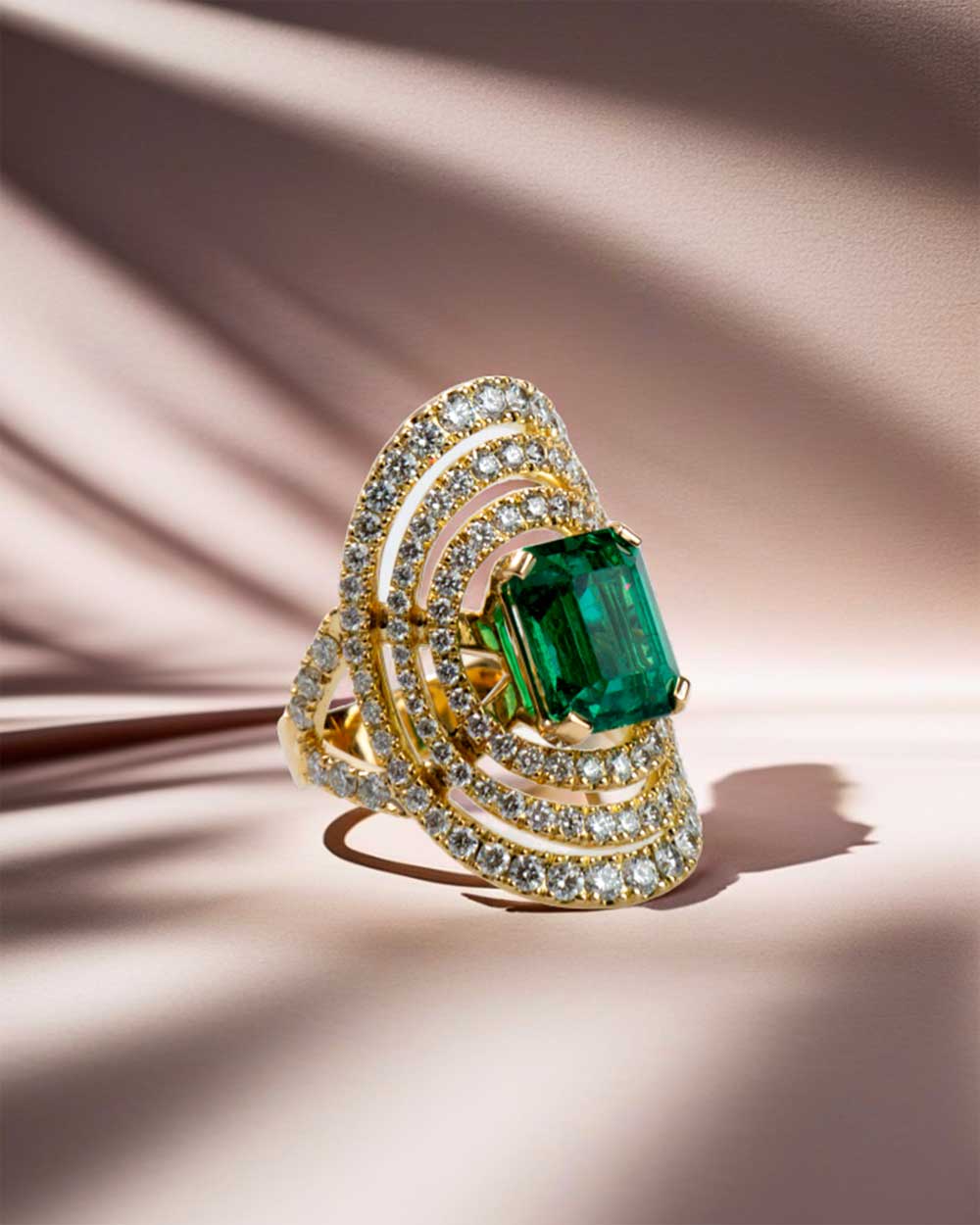
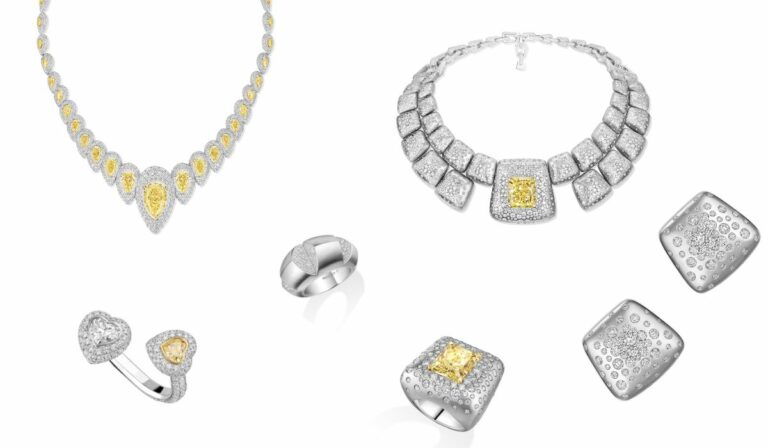
Our quality standards are extremely high. For diamonds, we work within a range from D to G in colour and from IF to VS in clarity, with particular attention to cut: we use exclusively Excellent and Very Good cuts. For smaller stones, the selection process is even more demanding; I may spend days examining hundreds of carats in order to select only pure F diamonds.
As for coloured stones, we work exclusively with precious gemstones—emeralds, sapphires and rubies—always certified. Here, a more personal and sensitive dimension also comes into play: the shape of a heart, the depth of a red. Iconic parameters such as the Burmese “pigeon blood” ruby remain a reference, but the final choice always arises from a balance between beauty, character and identity.
The same philosophy guides everything that surrounds the jewel. Our presentation boxes are entirely made in Italy. At times this means sustaining a significantly higher cost, but it is a conscious choice: knowing that nothing is born from exploitation is an essential part of our understanding of luxury.
Luxury clients are changing: today, meaning, ethics and individuality matter more than ever. How do you see the concept of “modern luxury” evolving, and where does Salvadori position itself within this future?
Modern luxury, as I perceive it, is no longer about ostentation. Today it is a conscious, intimate choice, often a quiet one. People are looking for objects that carry meaning, a story, a soul—pieces that truly reflect the person who wears them.
I believe that true luxury lies in time, care, attention to detail and responsibility. It means knowing where what you wear comes from, how it was created and by whom. It is also the possibility of choosing something unique, something that does not follow a trend but expresses an identity.
Salvadori naturally fits within this vision. Our jewellery is not designed to please everyone, but to speak to those who recognise authentic value. Each piece is born from a precise artistic vision, from an ethical supply chain and from craftsmanship that requires time and respect.
In the future of luxury, I see less noise and more truth. Less quantity and more meaning. In this space, Salvadori continues to move forward with coherence, fidelity to its values and a strong creative identity.
Looking ahead, what excites you most right now: a new collection, a new market, or a creative direction you have not yet explored?
At this moment, what excites me most is the possibility of continuing to evolve while remaining faithful to my vision. Rather than pursuing a single project or a new market, I feel the need to deepen an increasingly personal and free creative direction, in which jewellery becomes an authentic expressive language. I am working on new collections that are born from lived experiences, from travels and from observations that have shaped me, and that require time and maturation. I am drawn to the idea of moving towards ever more essential forms, where emotion and material can speak without mediation.
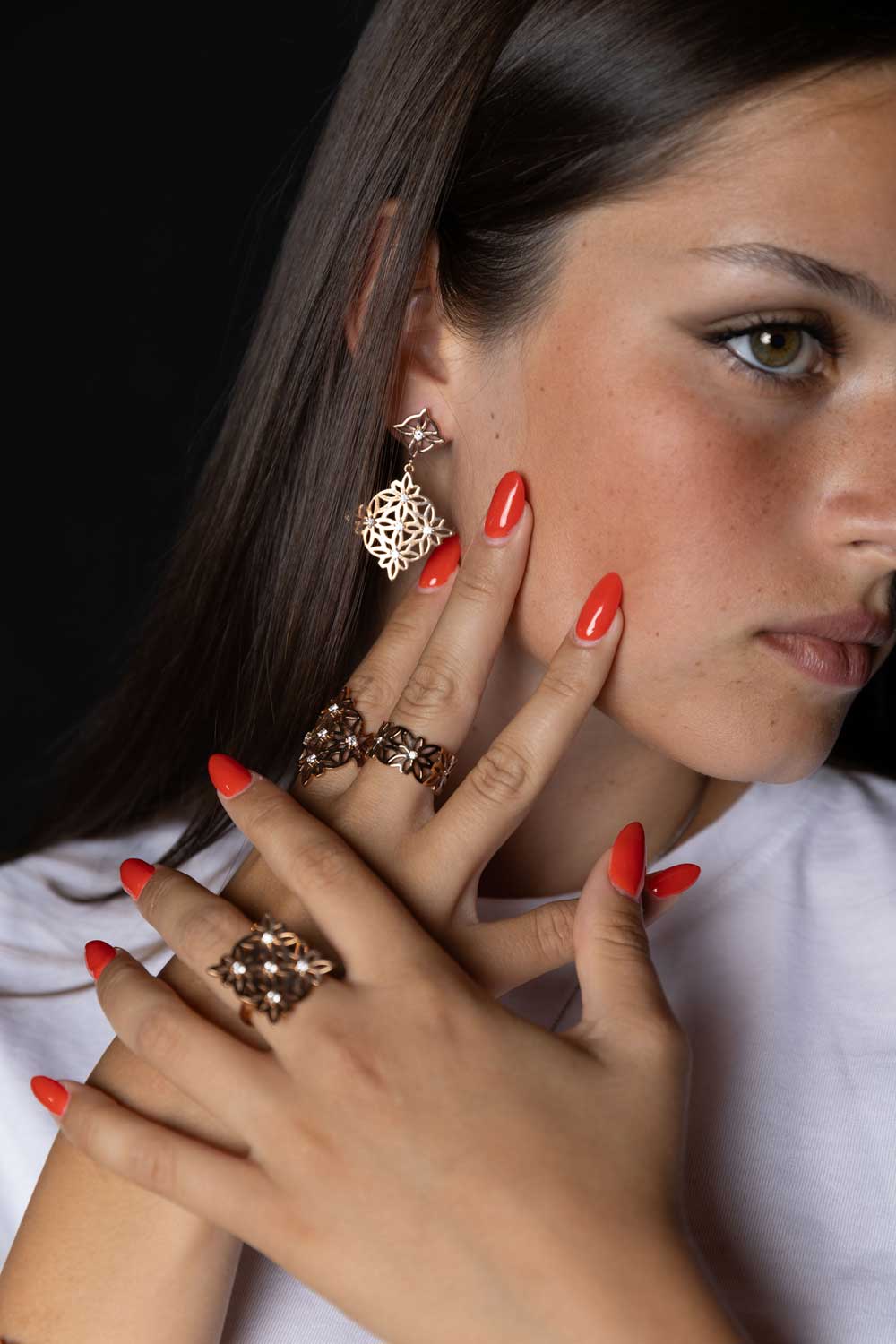
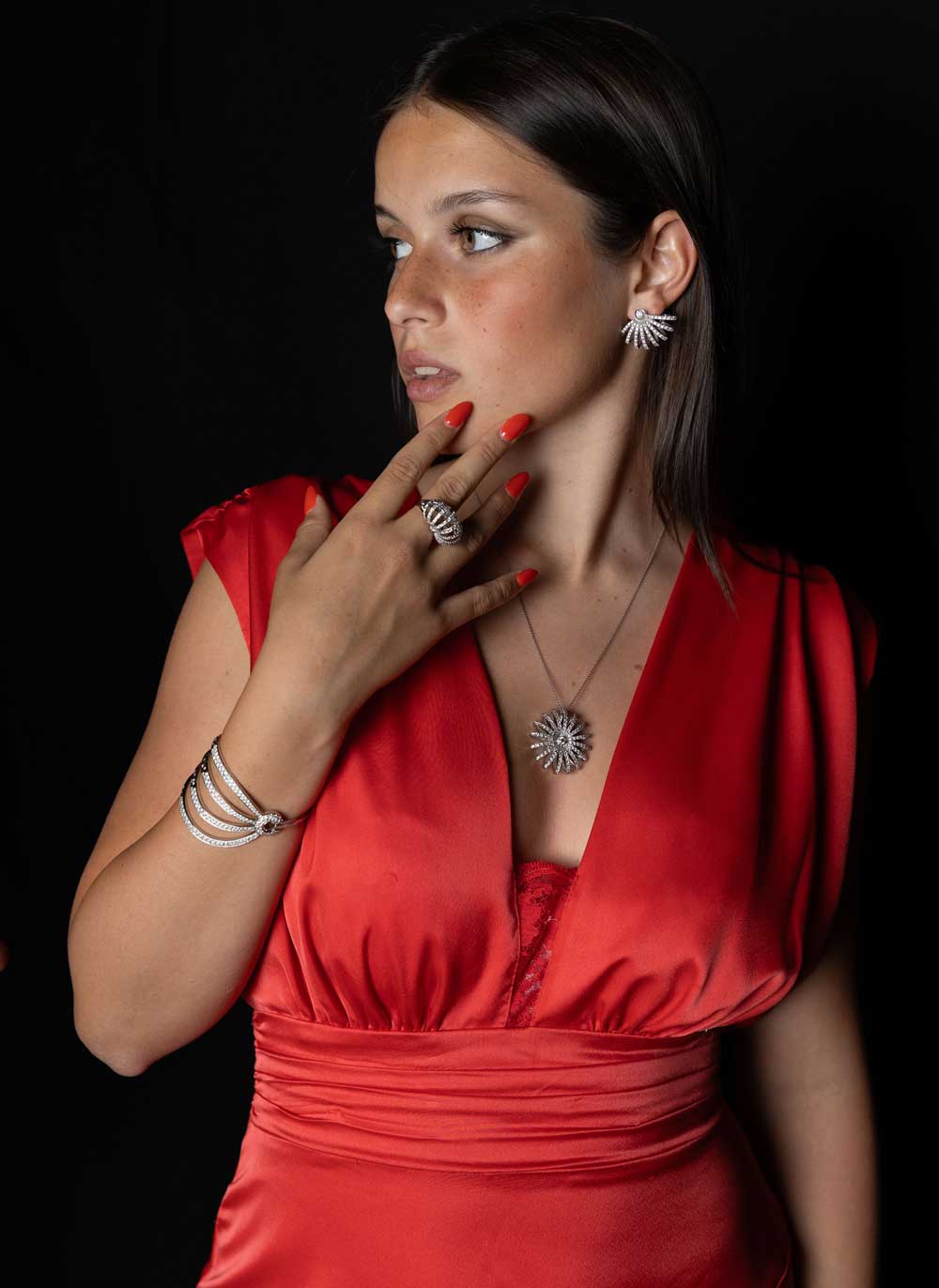
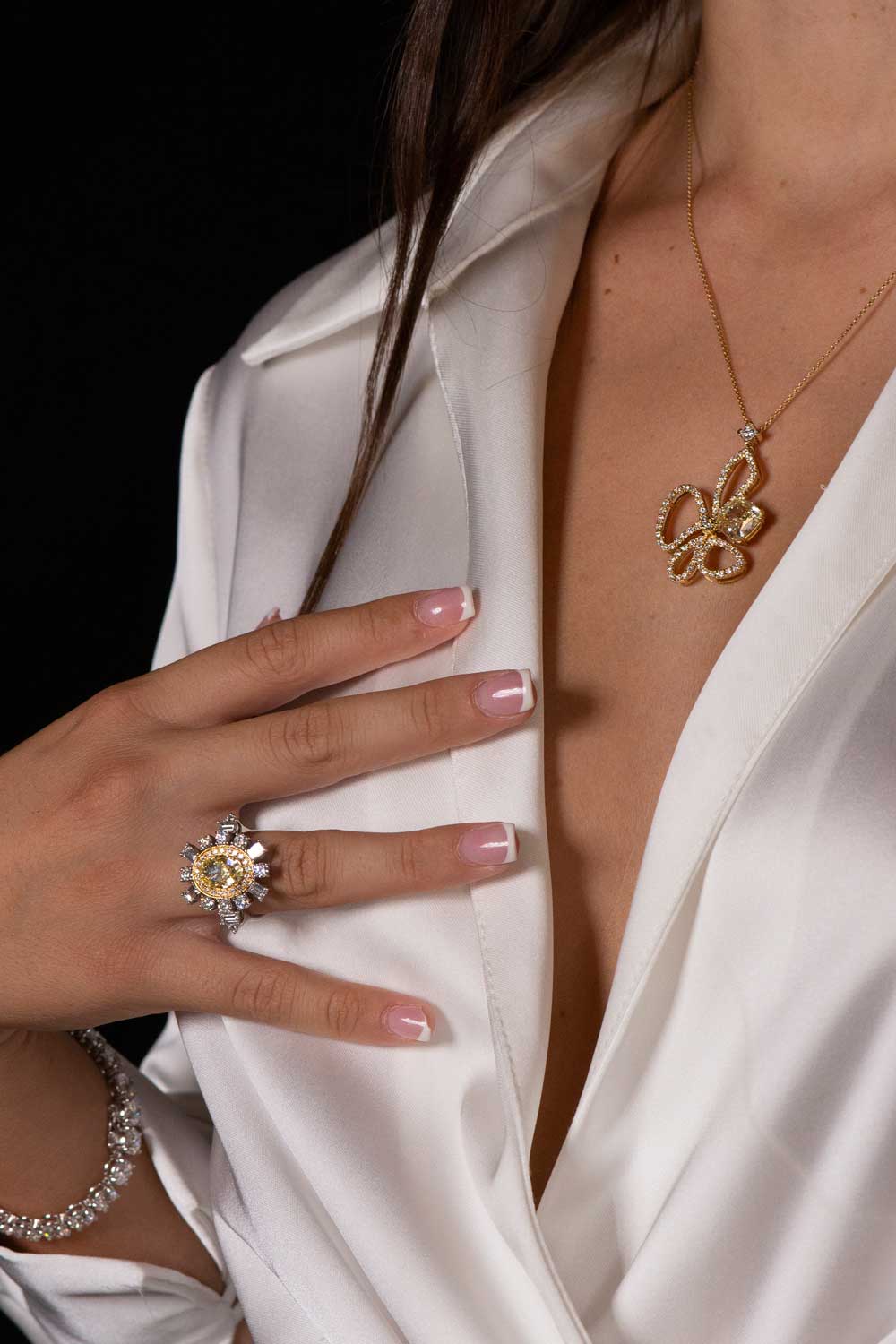
Within this creative journey, a presence that is very important to me is that of my daughters. They often accompany me to travels, events and fairs, and for several years now they have also participated as models. It is a natural way of sharing my world with them—one made of beauty, work and respect.
I do not see this as a symbolic gesture, but as a spontaneous continuity: passing on a way of seeing, an ethic, and an approach to creation. For me, the future is not a race towards the new, but a path of depth, truth and creative coherence.